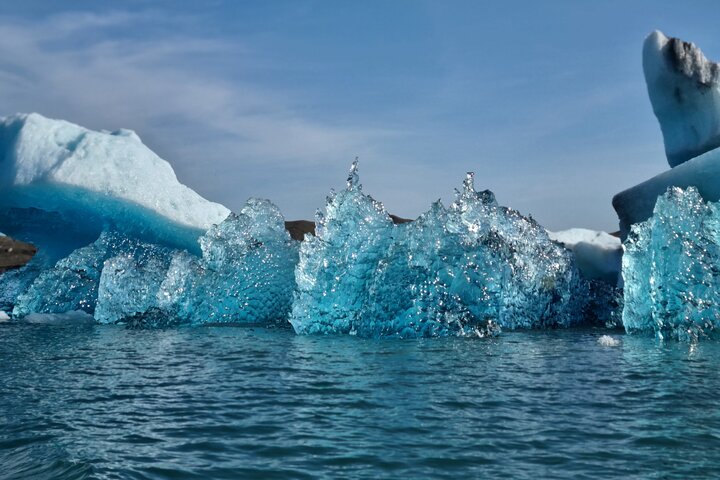
Jökulsárlón Glacier Lagoon at sunset. Photo: Sven Lindqvist
What Is This Iceland Guide?
An Iceland guide is a practical resource for planning glacier and ice tours on Iceland's south coast. I've spent eight seasons photographing Vatnajökull, and I've learned which tours deliver and which ones waste your time. This guide covers Jökulsárlón glacier lagoon, Diamond Beach, ice caves under Vatnajökull and Katla, glacier hikes on Sólheimajökull, and how to combine them into a trip that makes sense for your schedule and budget.
Vatnajökull is Europe's largest glacier by volume, covering 8% of Iceland. Jökulsárlón lagoon formed between 1934 and 1935 as Breiðamerkurjökull glacier retreated — it's now Iceland's deepest lake at 248 metres. Icebergs in the lagoon can take 5+ years to melt and reach the sea at Diamond Beach. That's the scale of what you're looking at.
"I pulled into the Jökulsárlón parking lot at 4:30 AM in June 2019. The lagoon was glass-still. Icebergs glowed pale blue in the pre-dawn light. A seal surfaced 10 metres from shore, stared at me, and disappeared. The first direct sunlight hit the icebergs at 4:47 AM and the whole lagoon turned gold. No tour buses. No crowds. Just the sound of ice cracking in the silence. Three hours later the first bus arrived and the place was a different world — 50 people on the shore, selfie sticks out, someone playing music from a Bluetooth speaker. Get there before the buses. The lagoon at sunrise is a different place entirely."
— June 2019, Jökulsárlón parking lot, 4:30 AM
Jökulsárlón: The Heart of Glacier Iceland
Jökulsárlón is the main event. A glacial lagoon at the edge of Breiðamerkurjökull glacier, where icebergs calve from the glacier face and drift slowly out to sea. The lagoon is 248 metres deep and filled with icebergs ranging from chunky white blocks to electric-blue sculptures, some over 1,000 years old. It's about 380 km from Reykjavík — roughly 5 hours driving without stops, 7+ hours with the south coast waterfalls.
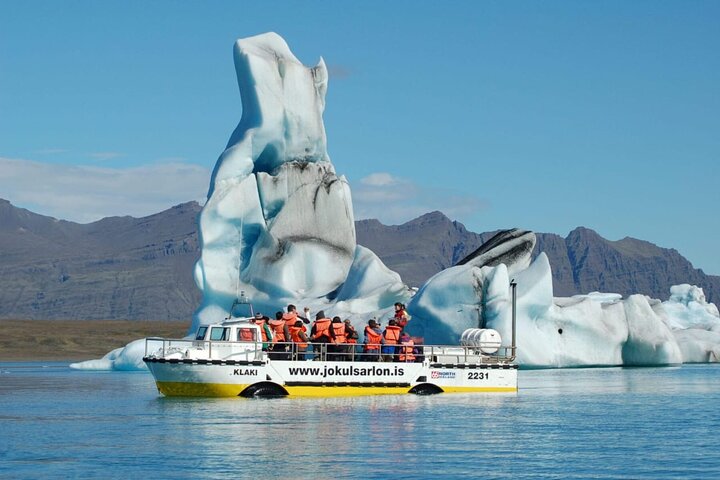
The boat tours use amphibious vehicles that drive directly into the lagoon. On a clear day you float among icebergs while the guide pulls up chunks of 1,000-year-old compressed snow for you to taste. The Diamond Beach and Jökulsárlón Day Tour with Boat Ride covers the lagoon, the beach, and the south coast waterfalls in one long day. Book the 10-11 AM boat slot — the light is best for iceberg photos then, and the operators schedule boats to avoid midday crowds.
If you have more flexibility, the Jökulsárlón Glacier Lagoon Private Tour gives you a dedicated guide and a flexible itinerary. I did one with three other photographers in October 2021 — we spent 90 minutes at the lagoon waiting for light to hit a specific iceberg, then another 45 minutes at Diamond Beach. A group tour would have moved us on after 30 minutes. Split between four people, the cost was roughly the same as a group tour.
"I did the amphibious boat tour in pouring rain, July 2020. 8°C, visibility about 100 metres. Got soaked within five minutes. But the guide, a woman from Höfn named Sigrún, handed out blankets, pointed out seal colonies I couldn't see, and told stories about the glacier's retreat — she'd been running these boats for 17 years and had watched the lagoon double in size. Then a chunk of ice the size of a car calved off Breiðamerkurjökull and crashed into the lagoon about 80 metres from the boat. The rain made the icebergs look more dramatic — darker water against pale blue ice. Icelandic tours run in almost any weather. Bring waterproofs and go anyway."
— July 2020, Jökulsárlón amphibious boat tour, 8°C and pouring rain
Diamond Beach: The Truth About the Ice Diamonds
Diamond Beach (Breiðamerkursandur) is where icebergs wash ashore after floating through the lagoon outlet. The black volcanic sand against blue and white ice is one of Iceland's most photographed scenes. But here's what nobody tells you: Diamond Beach is wind-dependent.
I drove 5 hours from Reykjavík in February 2020 expecting a beach covered in ice diamonds. I found three small chunks of ice and a lot of black sand. The wind had been blowing offshore for three days — no ice washes ashore in offshore wind. A local photographer told me she checks the wind forecast, not the weather, before going. Check windfinder.com or yr.no before you drive.
The fog can actually work in your favour. In August 2022, I drove from Höfn at 6 AM expecting sunrise photos. Hit a fog bank 10 km out — visibility dropped to 20 metres. At the beach, iceberg shapes emerged from the fog like slow-moving ships. Every few minutes the fog thinned for 30 seconds, revealing a different arrangement of ice. I shot 200 frames. The fog photos were better than any clear-day shots I've taken.
Ice Caves: What Instagram Doesn't Show You
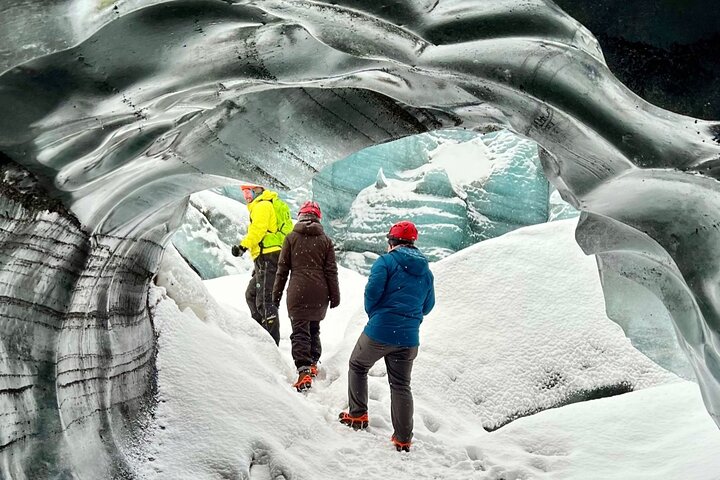
Ice caves are the biggest surprise for most visitors. I arrived at the Katla ice cave at 11 AM in March 2022 to find three Super Jeeps and about 40 people in the cave. Couldn't take a photo without someone in it. The guide said the 8 AM and 4 PM slots have half the crowd. I booked the 8 AM for the next day and had the cave to ourselves for 20 minutes. Book the first or last slot of the day — midday is chaos.
Also, manage your expectations about colour. Ice caves are mostly grey-black volcanic ice with blue patches. The electric-blue photos on Instagram are heavily edited. The real thing is still remarkable — the texture and scale impress more than the colour. And ice caves are warm — they trap body heat. You'll be sweating in your parka within 15 minutes. Wear a fleece and a shell jacket, not a down parka.
Ice caves are ephemeral — they form new each winter and collapse in spring. The season runs November through March. Most summer ice cave tours are cancelled because the caves collapse by April. Winter tours require Super Jeep transport (modified 4x4 vehicles) since the access roads are impassable to regular cars.
"In March 2025 I spoke with the boat tour operator at the lagoon ticket office around 2 PM on a Tuesday. He told me the 10 AM and 4 PM zodiac tours consistently have half the passengers of the 11 AM–2 PM slots, and the guides are more relaxed, more willing to linger near interesting ice formations. I switched my booking to 4 PM the next day. He was right — there were 6 people on the boat, the light was starting to slant, and the guide took us deep into the lagoon to a spot where three seals were resting on a flat iceberg. Midday is for the Instagram crowd. Book the edges of the day."
— March 2025, Jökulsárlón ticket office, conversation with boat operator
Glacier Hikes: What to Expect on the Ice
Sólheimajökull is the closest glacier tongue to Reykjavík at about 2 hours. The first time I saw it, I was disappointed — the glacier tongue was black with volcanic ash and dirt, looking nothing like the pristine blue ice in brochures. But 20 minutes up the glacier with crampons, the surface ice was clean, blue, and full of crevasses. The dirty appearance is just the terminal moraine. Don't judge a glacier by its snout.
The South Coast and Glacier Hike Tour from Reykjavík combines the waterfalls with a beginner-friendly 1.5-hour hike on Sólheimajökull. The guides handle crampon training well — the first 10 minutes on ice are the most dangerous, and they know it.
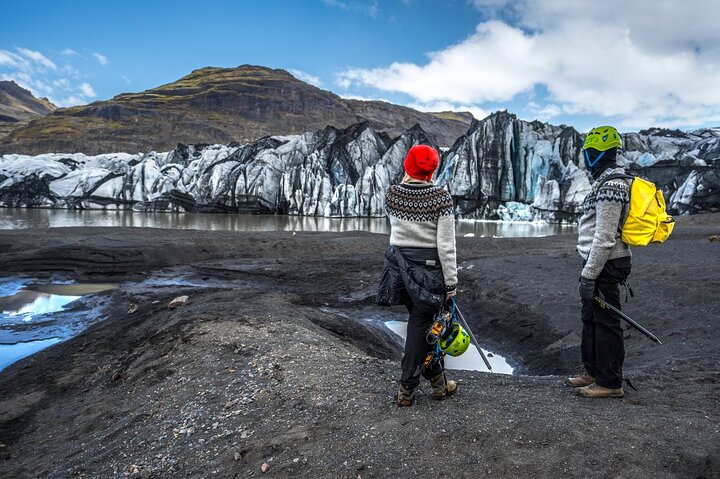
Glacier hiking requires crampons — all operators provide them. But check crampon straps every 20 minutes. In March 2021, my left crampon slipped sideways on a steep section at Sólheimajökull. The guide caught my arm before I slid. He said he sees it twice a week. Tighten directly over the boot, not over gaiters.
Summer glacier hikes in Iceland often run in the evening when the ice is less slippery. Surface meltwater refreezes overnight, so late afternoon and evening hikes have noticeably better footing than morning groups report. And wear sunglasses even on cloudy days — glacier glare causes snow blindness faster than you'd think.
Practical Tips From Eight Seasons on the Ice
- Book Jökulsárlón boat tours for 10-11 AM. The light cuts through the ice at that angle, making the blue pop. Later in the day the sun is too high and flattens the scene.
- Fill up at Vík. It's the last reliable fuel stop before Höfn. The Vík station is card-only after 8 PM and foreign cards can be temperamental. I pulled in at 9 PM with the fuel light on and had to wake the hotel owner for a jerry can.
- Bring a thermos of hot chocolate. The Jökulsárlón parking lot café charges 950 ISK for black coffee and is often closed outside peak hours. The Hali Country Hotel café 12 km east is better. Better still, the N1 gas station in Höfn serves a lamb soup (kjötsúpa) for ISK 2,200 that beats most restaurant meals on the south coast.
- Check road.is for winter conditions. The road to Jökulsárlón closes in severe weather. The drive passes 14 single-lane bridges between Vík and the lagoon.
- Wear two pairs of gloves. One will get wet from handling ice or touching the boat railing. Switch to the dry pair for the drive back. Cotton kills in glacier conditions — layer with wool or synthetics.
- Don't wear jeans on a glacier hike. They freeze solid when wet and chafe badly. I've seen it happen to clients. Not pretty.
- Book glacier hiking boots a half-size larger. Feet swell at altitude and crampons tighten the fit. Don't wear brand-new boots — crampons need boots with solid ankle support and a stiff sole.
- Bring a polarising filter for your camera. It cuts reflections on the lagoon surface and makes the ice look blue instead of grey.
- Wear sunscreen on your chin and under your nose. The ice reflects UV upward and you'll burn in places you don't expect. I got a sunburn on my chin in June. Not my proudest moment.
Common Mistakes to Avoid
Booking a Jökulsárlón day trip from Reykjavík in winter. You'll spend 10 hours in a bus and 1 hour at the lagoon. In December the sun rises around 11 AM and sets by 3:30 PM. You drive 2+ hours in the dark each way and see the lagoon in grey light. Stay overnight in Vík or Höfn instead, or book for summer when you get 20+ hours of daylight.
Trusting the weather forecast. Icelandic weather changes every 15 minutes. Always bring waterproofs regardless of the forecast. Tours run in almost all weather — they only cancel in extreme wind or whiteout conditions.
Skipping the flotation suit on zodiac tours. It adds 15 minutes of comfort on cold lagoon water. The suits are bulky but worth it.
Standing too close to the lagoon edge. Icebergs can roll without warning, creating waves that can pull you in. The water is 2°C — hypothermia sets in within minutes.
Assuming ice caves are blue. Most are grey-black volcanic ice with blue patches. The electric-blue photos are heavily edited.
Day Trip vs. Overnight at Jökulsárlón
Day trip from Reykjavík (14–16 hours)
Most visitors do the full South Coast in one day: Reykjavík → Skógafoss → Vík → Jökulsárlón (2–3 hrs) → Diamond Beach → return via Skaftafell → arrive ~10–11pm in summer. It's a long day but the drive is scenic and well-signposted. A guided day tour with boat ride takes the driving off your hands. Only feasible in late spring through early autumn — winter daylight is too short.
Overnight near the lagoon
Staying near Höfn or at Hótel Jökulsárlón gives you golden hour at the lagoon, the option to return for a second boat ride, and a much less rushed experience. In winter you're positioned for the prime Northern Lights window. The lagoon area is quiet at dawn (5–7am) — the ice turns deepest blue in cold, still air. If you can swing the budget, this is the better experience.
Top Iceland Glacier Tours on Viator
All products verified on Viator with real inventory.
Diamond Beach & Jökulsárlón Day Tour with Boat Ride
Most popular combination — lagoon, icebergs, and south coast waterfalls
Why it made the cut: The amphibious boats get closer to icebergs than zodiac alternatives. Book the 10-11 AM slot for the best light on the ice.
View on Viator →
Jökulsárlón Glacier Lagoon Private Tour
Private vehicle, flexible itinerary, no crowds
Why it made the cut: You set the pace and choose your stops. Worth the premium if you travel with 3-4 people — split cost approaches group tour pricing.
View on Viator →
South Coast Day Tour with Jökulsárlón & Glacier Hike
Combines the lagoon with an active glacier experience on Sólheimajökull
Why it made the cut: The most efficient way to experience both walking on ice and floating among icebergs in one day. Beginner-friendly hike.
View on Viator →Iceland Glacier Tours — Common Questions
Is Jökulsárlón worth the drive from Reykjavík?
Yes, but only if you have a full day or stay overnight. The drive is 5 hours each way without stops. A day trip from Reykjavík in winter is not worth it — you spend 10 hours on a bus and 1 hour at the lagoon. In summer the midnight sun gives you more daylight. Book a tour that includes the south coast waterfalls to break up the drive.
When is the best time to visit Jökulsárlón?
For boat tours: June to August. The amphibious boats run from May to September. For ice caves: November to March. For photography: the 10-11 AM slot gives the best light on icebergs. Sunrise in June (around 4:30 AM) is spectacular but requires an early start.
Can you see Diamond Beach without ice?
Yes, and it happens more often than you'd think. Diamond Beach is wind-dependent. Offshore wind means icebergs float out to sea instead of washing ashore. Check the wind forecast at windfinder.com before you drive. The black sand beach is still worth seeing, but manage your expectations.
What should I wear on a glacier hike in Iceland?
Layer with wool or synthetics — never cotton. Base layer, fleece mid-layer, waterproof shell jacket and trousers. Sturdy hiking boots with ankle support. Crampons and helmet are provided. Bring sunglasses (glacier glare causes snow blindness even on cloudy days) and two pairs of gloves.
Are ice caves blue in real life?
Partly. Ice caves are mostly grey-black volcanic ice with blue patches. The electric-blue photos on Instagram are heavily edited. The texture and scale are what impress — not the colour. Manage your expectations and you'll have a better experience.
Do glacier tours run in bad weather?
Almost always. Icelandic tours only cancel in extreme wind or whiteout conditions. I did a boat tour in July 2020 in pouring rain — 8°C, visibility 100 metres. The boat still ran. Bring waterproofs and go anyway. The experience is different but still worthwhile.
How much do glacier tours cost in Iceland?
Jökulsárlón boat tours typically run $70-120 USD. Ice cave tours cost ISK 15,000-25,000 ($110-185 USD). Full-day south coast tours with multiple stops range from $150-250 USD. Private tours start around $800-1,200 USD for a full day but split well between 3-4 people.
Ready to Book Your Iceland Glacier Tour?
All tours are verified on Viator with confirmed inventory. We only list products that are actually bookable — no dead links.
Browse all Iceland glacier tours on Viator →Is an Iceland Glacier Tour Right for You?
Book this if...
- You have a full day (14+ hours) for the drive from Reykjavík
- You want to see icebergs, seals, and one of Europe's most dramatic glacial landscapes
- You're a photographer looking for unique light conditions
Skip this if...
- You're short on time — the 5-hour drive each way demands commitment
- You're visiting in December and can't stay overnight — winter daylight is too short for a day trip
- You've visited Perito Moreno in Patagonia, which is more dramatic and closer to its glacier face
Best months: June–September (daylight, boat tours) or November–March (ice caves, aurora). Price range: $70–$250 for guided day tours; $800+ for private tours.
Explore More
Related guides and comparisons: