 >
>
I Didn't Expect Iceland to Feel Like This
I've spent eight seasons on Vatnajökull and I still get the timing wrong sometimes. My first ice cave tour was in March 2022. I booked the 11 AM slot thinking midday would give me the best light. What I got was a cave full of people. Three Super Jeeps were parked outside, about 40 people inside, and I couldn't take a single photo without someone in the frame. The guide saw my face and said, "8 AM or 4 PM — half the crowd." I rebooked for 8 AM the next day and had the cave to myself for 20 minutes. That was the moment I understood that ice caves are not about the cave itself — they're about the conditions you find it in.
The Vatnajökull ice cave is an ephemeral thing. It forms new each winter and collapses by spring. The ice you walk into in November is gone by April. That's not a marketing line — that's geology. The cave is carved by meltwater flowing through the glacier, and every season the water finds a different route. You can visit the same location two years running and find a completely different cave. Or no cave at all.
Most guides online tell you to "book early" and "dress warmly." That's not wrong, but it's not enough. Here's what nobody tells you: ice caves are warm. The glacier traps body heat. Within 15 minutes of entering a cave in a parka, you'll be sweating. I've seen people strip down to fleece layers inside caves that were -5°C outside. The cold is on the walk in, not in the cave itself.
Ice Cave by Katla Volcano — Super Jeep Tour from Vík — The Tour That Saved My Trip
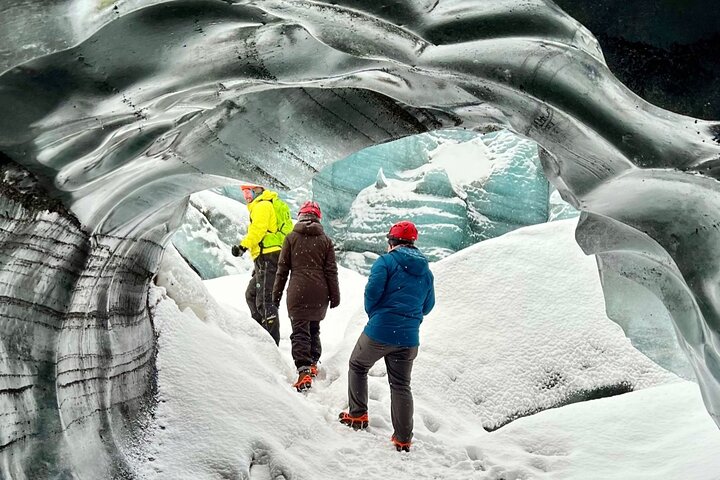
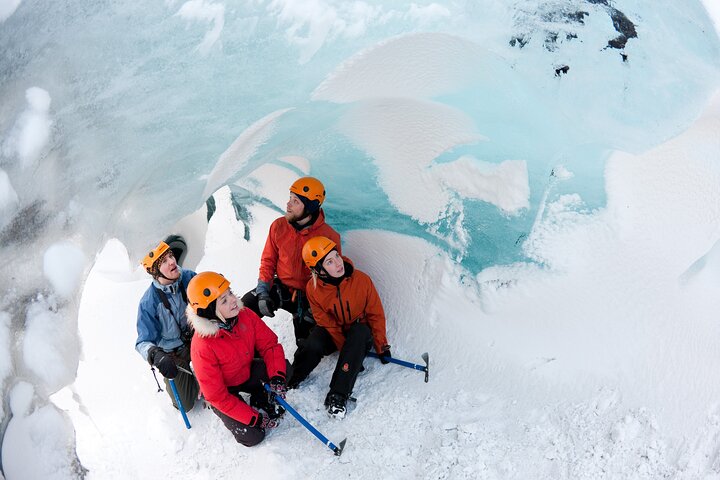
After the crowded cave experience, I needed a reset. I booked the Ice Cave by Katla Volcano Super Jeep Tour from Vík and it saved my trip. The Katla ice cave sits under Mýrdalsjökull, not Vatnajökull, and it's accessible year-round — most ice caves are November through March only. The Super Jeep ride alone is worth the price. These modified 4x4s have tyres the size of a small car and they climb riverbeds and black sand dunes like it's nothing. The guide drove us up a dry riverbed at a 30-degree angle and I was deeply impressed.
The cave itself is not the blue you see on Instagram. Katla ice is grey-black with volcanic ash streaks. The blue patches exist but they're smaller than the photos suggest. The guide explained that the ash layers are from the 1918 eruption of Katla — a volcano that erupts roughly every 40-80 years and is currently overdue. Standing inside that ice, touching ash that fell over a century ago, was more interesting than any perfectly blue cave I've seen. The tour costs ISK 22,000 per person (about $165 USD) and runs about 3 hours from Vík. It's not cheap, but the Super Jeep transport and the year-round access make it worth the money.
Who it's NOT for: Anyone who wants the classic blue ice cave photo. The Katla cave is darker and more textured than the Vatnajökull caves. If you're chasing that electric blue, book a winter-only Vatnajökull tour instead.
The Moments That Made Iceland Memorable
I've shot Jökulsárlón at sunrise, midday, and midnight sun. The lagoon looks different in every light. My best memory is from June 2019. I got to the parking lot at 4:30 AM. The lagoon was glass-still. Icebergs glowed pale blue in the pre-dawn light. A seal surfaced 10 metres from shore, stared at me, and disappeared. The first direct sunlight hit the icebergs at 4:47 AM and the whole lagoon turned gold. That moment lasted maybe four minutes. Then the tour buses arrived at 8 AM and the magic was gone. Get there before the tour buses. The lagoon at sunrise is a different place entirely.
But not every moment is golden. In February 2020, I drove 5 hours from Reykjavík to Diamond Beach expecting a beach covered in ice diamonds. I found three small chunks of ice and a lot of black sand. The wind had been blowing offshore for three days, pushing the icebergs out to sea. A local photographer told me she checks the wind forecast, not the weather, before going. Diamond Beach is wind-dependent. Check the forecast — offshore wind means no ice. I've since learned to check Icelandic Met Office wind forecasts before any south coast trip.
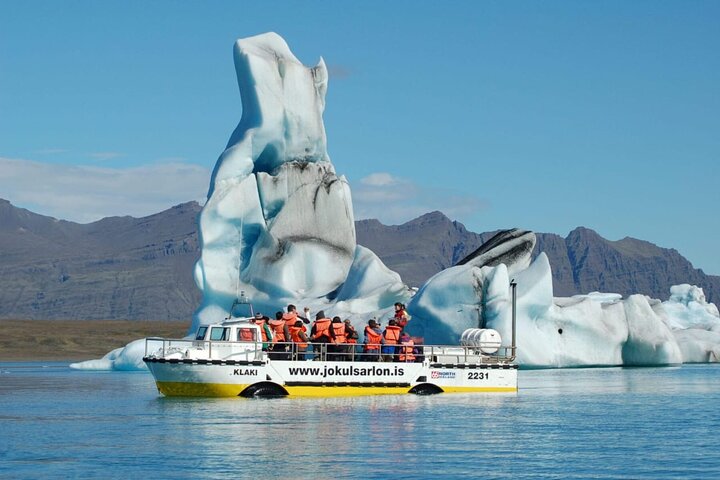
Then there was the rain at Jökulsárlón in July 2020. Pouring rain, 8°C, visibility about 100 metres. The amphibious boat tour still ran. I got soaked but the guide handed out blankets and told stories about the glacier's retreat. Saw a chunk of ice the size of a car calve and crash into the lagoon. The rain made the icebergs look more dramatic — the grey sky made the blue ice pop. Icelandic tours run in almost any weather. Bring waterproofs and go anyway — the experience is different but not worse.
Katla Ice Cave Tour from Vík — Small Group — A Lesser-Known Spot Worth Discovering
If you're a photographer or just someone who hates crowds, the Katla Ice Cave Tour from Vík — Small Group is the better pick. Same Super Jeep, same cave, but capped at about 8 people instead of 20. I did this tour in March 2022 after my crowded experience and it was night and day. The guide spent 40 minutes inside the cave explaining ice formation, ash layers, and how the cave shifts each season. I got photos without anyone in the frame. The group was small enough that we could spread out and explore different corners of the cave. It costs about ISK 25,000 per person ($185 USD) — ISK 3,000 more than the standard tour — and that extra money buys you time and space. Worth it if you're serious about the experienc
Who it's NOT for: Budget travellers or anyone on a tight schedule. The small group tour books out faster and has fewer slots. Book at least a week ahead in peak season.
What Really Surprised Me About Iceland
I've done glacier work in both Iceland and New Zealand, and the ice is fundamentally different. New Zealand glacier ice is whiter, denser, and the guides cut steps into the ice for the hike. Icelandic glacier ice has more volcanic ash layers, is bluer, and the terrain is more varied. NZ hikes feel structured — you follow a path the guide has prepared. Iceland hikes feel exploratory — you're moving over ice that shifts under your feet. They're completely different experiences. Don't choose — do both if you can. I've written a full comparison in my Iceland vs New Zealand glacier guide.
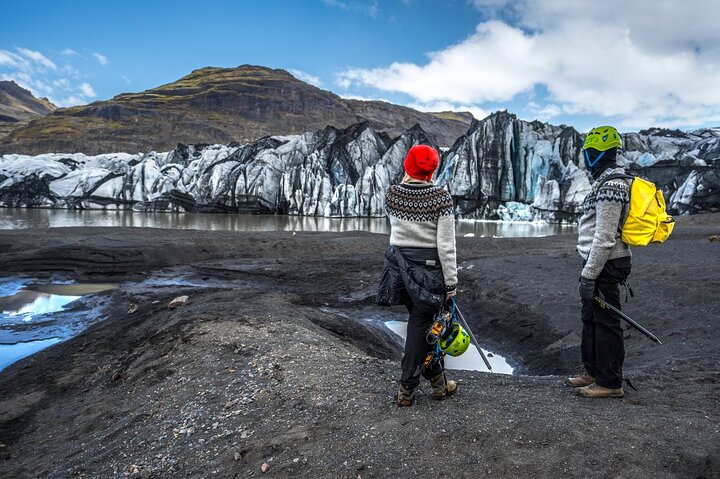
Another surprise: the Sólheimajökull glacier looks dirty from the parking lot. In September 2020, I walked up to the glacier tongue and it was black with volcanic ash and dirt. Looked nothing like the pristine blue ice in the brochure. But 20 minutes up the glacier with crampons, the surface ice was clean, blue, and full of crevasses. The dirty appearance is just the terminal moraine — the debris that accumulates at the glacier's snout. Don't judge a glacier by its snout. The real ice is further up.
And then there's the crampon thing. In March 2021, 20 minutes into a guided hike on Sólheimajökull, my left crampon slipped sideways on a steep section. The guide caught my arm before I slid. The strap had loosened because I'd tightened it over a thick gaiter. Guide said he sees it twice a week. Spent 2 minutes re-rigging and checked every 20 minutes after that. Check crampon straps every 20 minutes on ice. Tighten directly over the boot, not over gaiters.
Sven Lindqvist's Insider Tips for Getting It Right
I've made enough mistakes on these glaciers that I can save you the trouble. Here's what I've learned across eight seasons on Vatnajökull and Franz Josef:
- Book the first or last ice cave slot of the day. Midday is chaos. I learned this the hard way with 40 people in a cave. The 8 AM and 4 PM slots have half the crowd.
- Check the wind forecast, not the weather forecast, for Diamond Beach. Offshore wind means no ice on the beach. I drove 5 hours for three chunks of ice before I learned this.
- Fill up at Vík. It's the last reliable fuel stop before Höfn. The station can be temperamental with foreign cards after 8 PM. I learned this at 9 PM with the fuel light on and a card that wouldn't work.
- Bring two pairs of gloves. One will get wet from handling ice or touching the cave walls. Swap them out on the walk back.
- Wear sunglasses even on cloudy days. Glacier glare causes snow blindness faster than you'd think. I've seen it happen to clients on overcast days.
- Don't stand too close to the lagoon edge at Jökulsárlón. Icebergs can roll without warning and create waves that wash over the shore. It's rare but it happens.
- For photographers: a polarising filter is essential for cutting lagoon reflections. Without it, the iceberg reflections wash out the blue.
- Layer with wool, not cotton. Cotton kills when it gets wet in glacier conditions. Wool insulates even when damp.
- Summer glacier hikes: wear sunscreen on your chin and under your nose. The ice reflects UV upward and you'll burn in places you don't expect.
- If driving the south coast in winter, check road.is for conditions. The road to Jökulsárlón closes in severe weather. I've been turned back twice.
For a deeper dive on gear and preparation, read my first-time glacier guide.
What I Wish I'd Known Before I Went
This is the section I wish I'd read before my first trip. Here's the unvarnished truth:
- Ice caves are not blue like the photos. Most are grey volcanic ice with blue patches. The Instagram photos are heavily edited. Manage your expectations and you'll appreciate the real thing more.
- Don't book a Jökulsárlón day trip from Reykjavík in winter. You spend 10 hours in a bus and 1 hour at the lagoon. The drive is 5 hours each way with stops. If you can, stay overnight in Vík or Höfn. The south coast deserves more than a day.
- Summer ice cave tours don't exist. Most caves collapse by April. The only year-round cave is under Katla. If you're visiting in June, book the Katla cave or a boat tour instead.
- Wearing jeans on a glacier hike is a mistake. They freeze solid when wet and chafe badly. I've seen people in jeans on Sólheimajökull and they were miserable within 30 minutes.
- Boat tours operate April through October. Ice cave tours typically run November through March. If you're visiting in April, you might miss both. Check the season before you book.
- The Perlan museum in Reykjavík has a 100-metre indoor artificial ice cave. It's not a real glacier but it's good for understanding ice geology before your tour. I send first-timers there to get oriented before heading south.
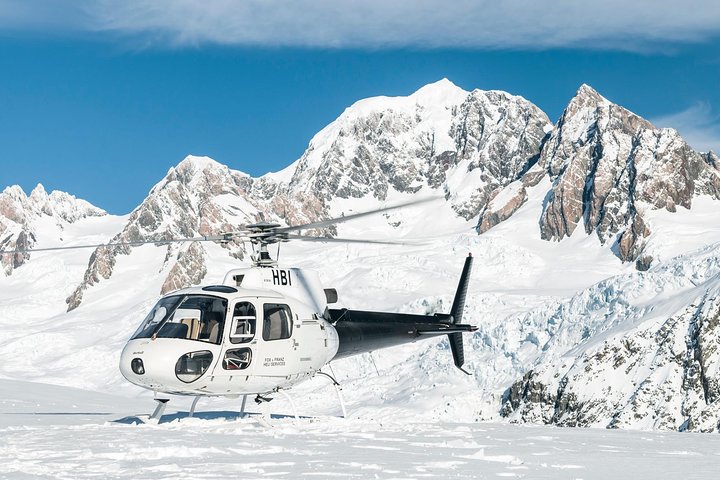
- If your NZ helicopter tour gets cancelled, ask to be rebooked for the next morning. Winds are usually calmer in the morning. I had a 40% cancellation rate in August 2021 and the morning slots were the ones that flew.
- Skip the Jökulsárlón café. The food is overpriced and mediocre. There's a better café at the Hali Country Hotel, 12 km east. They serve a decent lamb soup for ISK 2,200.
- Book glacier hiking boots a half-size larger than your normal size. Feet swell at altitude and crampons tighten the fit. I learned this after a painful 3-hour hike in boots that were too tight.
- Check whether your glacier tour includes hotel pickup. Some Skaftafell meeting points are 5 km from the nearest accommodation with no taxi service or public transport. I've had clients stranded because they assumed pickup was included.
If you're torn between hiking and caving, read my glacier hike vs ice cave comparison to decide which suits your trip better.
Ice Cave by Katla Volcano — Super Jeep Tour from Vík
Year-round ice cave tour in a Super Jeep. The Katla cave has striking black volcanic ash layers in the ice. Best for winter visitors and anyone curious about ice caves outside peak season. The Super Jeep ride is an adventure in itself.
 Check Availability →
Katla Ice Cave Tour from Vík — Small Group
Smaller group version of the Katla ice cave tour. More time inside the cave and better for photos. Best for photographers and travellers who prefer intimate group experiences. Costs about ISK 3,000 more than the standard tour but worth it for the space.
 Check Availability →
Sólheimajökull Glacier Hike — Small Group Blue Ice Adventure
3-hour small-group glacier hike focused on ice formations. More time on ice than the combo tours. Best for travellers who want a proper glacier experience without the south coast road trip. The ice is cleaner than it looks from the parking lot.
 Check Availability →
Explore More
Related comparisons and guides: