I Didn't Expect Travel to Feel Like This
I've shot Jökulsárlón at sunrise, midday, and midnight sun — and the lagoon looks completely different in each light. The 10 AM boat tours get the best iceberg reflections.
My first trip was a disaster of my own making. I'd flown into Reykjavík in February, booked a day tour that departed at 9 AM, and spent ten hours on a bus for exactly 45 minutes at the lagoon. The sun set at 4:30 PM. I saw the lagoon in twilight and nothing else. That's the mistake most guides don't warn you about: booking a Jökulsárlón boat tour as a day trip from Reykjavík in winter means you spend more time on the road than at the ice. The drive is 5 hours each way without stops. With stops at Seljalandsfoss and Skógafoss, you're looking at 7+ hours. In December, you drive the first two hours in the dark and the last two hours in the dark. You miss most of the south coast scenery.
I came back in June 2019 with a different plan. I rented a car in Reykjavík, filled the tank at the N1 in Selfoss (not Vík — I learned that lesson the hard way later), and drove straight to the lagoon. I arrived at 4:30 AM. The parking lot was empty. The lagoon was glass-still. Icebergs glowed pale blue in the pre-dawn light. A seal surfaced 10 metres from shore, stared at me, and disappeared. The first direct sunlight hit the icebergs at 4:47 AM and the whole lagoon turned gold. Get there before the tour buses. The lagoon at sunrise is a different place entirely.
Jökulsárlón glacier lagoon formed between 1934 and 1935 as Breiðamerkurjökull glacier retreated. It's a relatively young feature, geologically speaking, and it's growing every year. The boat tours operate from April through October. Ice cave tours typically run November through March. Don't book a summer ice cave tour — most caves collapse by April. I learned that the hard way when I showed up at Katla in July and found a collapsed tunnel.
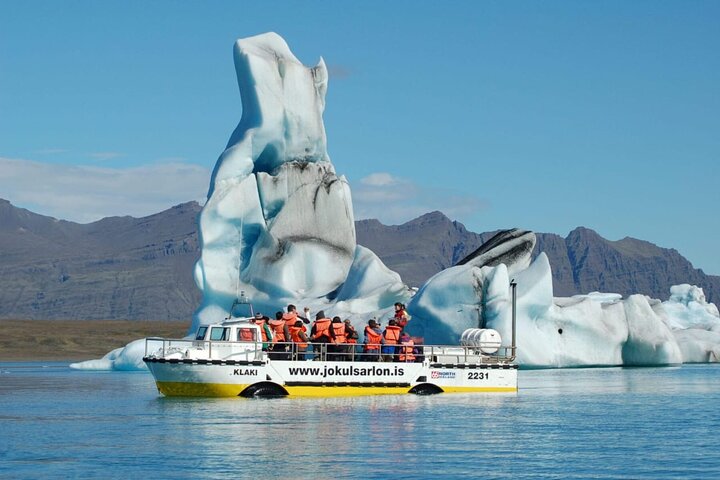
I booked the Diamond Beach and Jökulsárlón Day Tour with Boat Ride for a client shoot the next day. It was the most efficient way to see Jökulsárlón from Reykjavík. Long day — 14 hours — but it covers all south coast highlights and includes the amphibious boat ride among icebergs. The amphibious vehicles drive directly into the lagoon. It sounds gimmicky but it works.
Diamond Beach and Jökulsárlón Day Tour with Boat Ride
The most efficient way to see Jökulsárlón from Reykjavík. Includes the amphibious boat ride among icebergs. Long day (14 hours) but covers all south coast highlights. Best for: First-time visitors wanting a complete south coast and lagoon experience in one day.
Check Availability →I've done the amphibious boat tour in rain, sun, and fog. In July 2020, I took the tour in pouring rain — 8°C, visibility about 100 metres. The amphibious boat still ran. Got soaked but the guide handed out blankets and told stories about the glacier's retreat. Saw a chunk of ice the size of a car calve and crash into the lagoon. The rain made the icebergs look more dramatic. Icelandic tours run in almost any weather. Bring waterproofs and go anyway — the experience is different but not worse.
The Moments That Made Travel in Glacier & Ice Tours Worth the Trip
The amphibious boat tours at Jökulsárlón sell out in peak summer — book 3-5 days ahead. I learned that in July 2021 when I tried to book same-day and found every slot full. The guide at the ticket office shrugged and said "August is worse." The 10 AM slot is the sweet spot: the sun is high enough to illuminate the icebergs without the harsh overhead light of midday. For photographers, a polarising filter is essential for cutting lagoon reflections. I shoot with a circular polariser on every Jökulsárlón frame.
The zodiac tours are different from the amphibious boats. The zodiacs are faster, smaller, and get closer to the glacier face. They hand out flotation suits that add 15 minutes of comfort on the cold lagoon water — wear them. The best Jökulsárlón zodiac tours are the early and late slots — fewer people, better light. I've done the 8 AM zodiac and had the lagoon almost to myself. The 4 PM slot in September catches the golden hour.
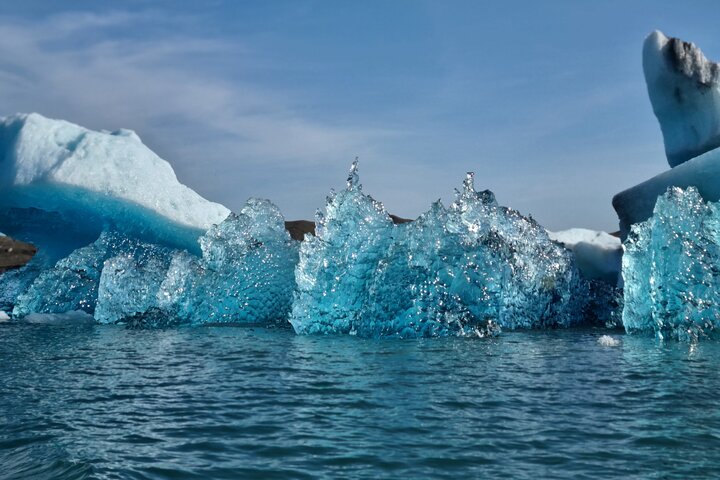
I booked the Jökulsárlón Glacier Lagoon Private Tour for a family shoot last summer. Worth the premium if you travel with 3-4 people. The guide let us spend 90 minutes at the lagoon instead of the standard 45. We stopped at a random farm for coffee. The flexibility matters when you're shooting.
Jökulsárlón Glacier Lagoon Private Tour
Private tour from Reykjavík with a dedicated guide. Flexible itinerary — you set the pace and choose your stops. Worth the premium if you travel with 3-4 people. Best for: Photographers, families, and anyone who wants to spend more time at the lagoon.
 Check Availability →
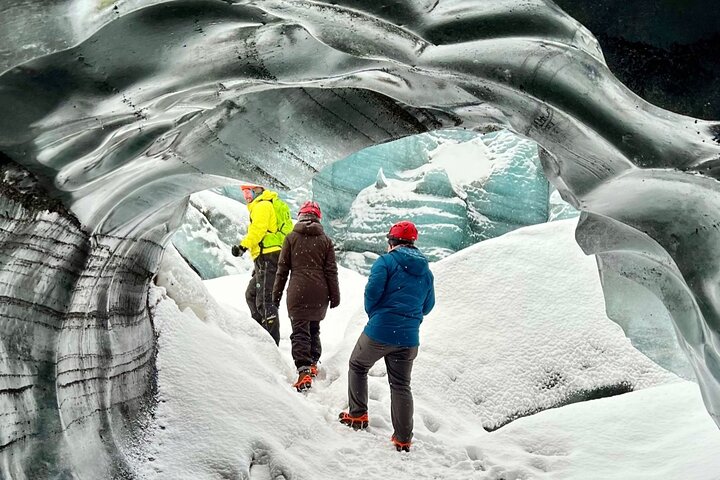
I've also done the South Coast and Glacier Hike Tour from Reykjavík which combines south coast waterfalls with a guided glacier hike on Sólheimajökull. The hike is beginner-friendly — about 1.5 hours on ice. The glacier tongue at Sólheimajökull was black with volcanic ash and dirt when I hiked it in September 2020. Looked nothing like the pristine blue ice in the brochure. But 20 minutes up the glacier with crampons, the surface ice was clean, blue, and full of crevasses. The dirty appearance is just the terminal moraine. Don't judge a glacier by its snout. The real ice is further up.
South Coast and Glacier Hike Tour from Reykjavík
Combines south coast waterfalls with a guided glacier hike on Sólheimajökull. The hike is beginner-friendly (about 1.5 hours on ice). Best for: Active travellers who want to walk on a glacier AND see the sights.
 Check Availability →
Diamond Beach is a different beast. I drove 5 hours from Reykjavík in February 2020 expecting a beach covered in ice diamonds. Found three small chunks of ice and a lot of black sand. The wind had been blowing offshore for three days. A local photographer told me she checks the wind forecast, not the weather, before going. Diamond Beach is wind-dependent. Offshore wind means no ice. Onshore wind pushes the icebergs onto the beach. Check the forecast at Vedur.is — the wind direction tab shows you what to expect.
In August 2022, I drove from Höfn at 6 AM expecting sunrise photos at Diamond Beach. Hit a fog bank 10 km out — visibility dropped to 20 metres. At the beach, iceberg shapes emerged from the fog like slow-moving ships. Every few minutes the fog thinned for 30 seconds, revealing a completely different arrangement of ice. Shot 200 frames. The fog photos were better than any clear-day shots I've taken. Bad weather can make better photos than clear skies. Don't cancel for fog.
What Really Surprised Me About Travel
The ice caves aren't blue. Most are grey-black with volcanic ash streaks. The Katla ice cave I visited in March 2022 looked like a coal mine with a few blue patches. Still impressive, but manage your Instagram expectations. The blue ice you see in photos is usually shot with a specific light angle or post-processing. The natural colour is closer to a dirty sky.
I arrived at Katla at 11 AM to find three Super Jeeps and about 40 people in the cave. Couldn't take a photo without someone in it. Guide said the 8 AM and 4 PM slots have half the crowd. Booked the 8 AM for the next day — had the cave to ourselves for 20 minutes. Book the first or last ice cave slot of the day. Midday is chaos.
Here's what nobody tells you about ice cave tours: they're warm. The caves trap body heat and you'll be sweating in your parka within 15 minutes. I wore a thermal base layer, a fleece, and a shell jacket for my second trip. Ditched the parka entirely. The guides wear the same.
The Perlan museum in Reykjavík has a 100-metre indoor artificial ice cave — not a real glacier but good for understanding ice geology before your tour. I took a client there before a Sólheimajökull hike and the visual reference helped them understand what they were seeing. Worth an hour if you're in Reykjavík.
New Zealand glacier ice is different from Iceland's. NZ glacier ice is whiter, denser, and the guides cut steps. Icelandic glacier ice has more volcanic ash layers, is bluer, and the terrain is more varied. NZ hikes feel more structured; Iceland hikes feel more exploratory. They're completely different experiences. Don't choose — do both if you can. I've shot Franz Josef and Sólheimajökull back-to-back and the contrast is striking. See my comparison at Iceland vs New Zealand glaciers.
Sven Lindqvist's Insider Tips for Getting It Right
- Book the 10-11 AM boat tour slot. The light is best for iceberg photos. The sun is at the right angle to illuminate the ice without washing it out.
- Bring a thermos of hot chocolate. The Jökulsárlón parking lot café is expensive and often closed. There's a better café at the Hali Country Hotel 12 km east — they do a good coffee and soup.
- Fill up at Vík. It's the last reliable fuel stop before Höfn. I pulled into Vík at 9 PM with the fuel light on in October 2021. The station was closed — card-only after 8 PM. My foreign card wouldn't work in the pump. Had to find the hotel reception, wake the owner, and pay cash for a jerry can. The N1 gas station in Höfn serves a lamb soup (kjötsúpa) that is better than most restaurant meals on the south coast — ISK 2,200.
- Wear sunglasses even on cloudy days. Glacier glare causes snow blindness faster than you'd think. I've had clients squinting through a hike because they thought clouds meant no UV. The ice reflects UV upward. Summer glacier hikes: wear sunscreen on your chin and under your nose — the ice reflects UV upward.
- Layer with wool, not cotton. Cotton kills when it gets wet in glacier conditions. Wool retains heat even when damp. I wear a merino base layer, a fleece mid-layer, and a waterproof shell. That's enough for any Icelandic glacier tour.
- Check crampon straps every 20 minutes on ice. Twenty minutes into a guided hike on Sólheimajökull in March 2021, my left crampon slipped sideways on a steep section. The guide caught my arm before I slid. The strap had loosened because I'd tightened it over a thick gaiter. Guide said he sees it twice a week. Tighten directly over the boot, not over gaiters.
- Book glacier hiking boots a half-size larger than your normal size. Feet swell at altitude and crampons tighten the fit. Don't wear brand new hiking boots — glacier crampons need boots with solid ankle support and a stiff sole.
- If driving the south coast in winter, check road.is for conditions. The road to Jökulsárlón closes in severe weather. I've been stuck in Höfn for two days waiting for the road to reopen. Plan for it.
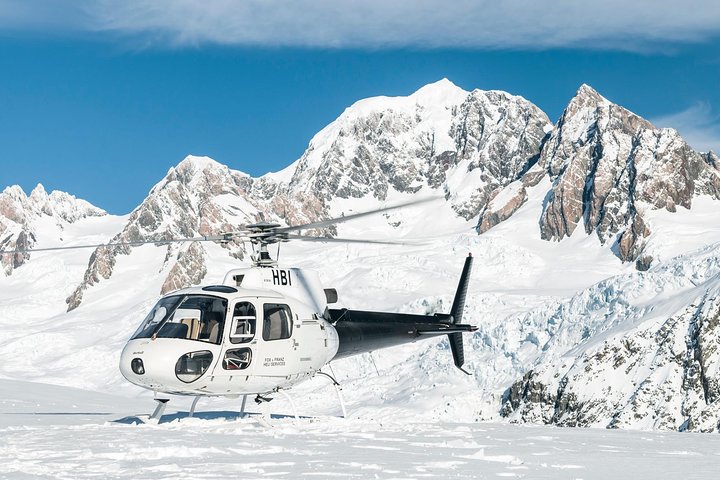
- For Franz Josef, book the earliest morning slot (8-9 AM). The ice is firmer and the light is better. If your helicopter tour gets cancelled in NZ, ask to be rebooked for the next morning when winds are usually calmer. Build buffer days — don't book a heli-hike on your last day. I booked a heli-hike three months ahead in August 2021. Got the call at 7 AM: cloud ceiling at 500 metres, no flights today. Rebooked for the next morning — same thing. Third day: clear skies, perfect flight. The guide told me August has a 40% cancellation rate.
- Heavy rain cleans the glacier surface. Three days of heavy rain at Franz Josef in September 2021 washed the surface debris off the glacier tongue. When the clouds broke on day four, the ice was the bluest I have ever seen — the rain had scoured off the grey surface layer. The guides said it happens maybe ten times a year. If you can wait out a storm, the ice afterward can be remarkable.
- In Iceland, the cheapest south coast tours depart from Vík, not Reykjavík. If you're staying in Vík, you save 2 hours of driving each way. Check local tour operators.
- If you're driving the south coast in one day, see Seljalandsfoss and Skógafoss on the return leg. The light is better for photos in the afternoon. The waterfalls face east and get morning shadow.
- Don't stand too close to the lagoon edge. Icebergs can roll without warning and create waves. I've seen tourists soaked up to the waist by a wave from a rolling iceberg. The water is 2°C.
- Bring two pairs of gloves. One will get wet from handling ice. I use a thin merino liner under a waterproof shell. When the shell gets wet, I switch to the spare pair.
- The Franz Josef Glacier hot pools are open until 9 PM, cost NZD $39 for adults, and are ideal after a long hike. I've done the heli-hike and gone straight to the pools. The contrast of hot water on cold skin is worth the price.
For more on choosing between glacier activities, see glacier hike vs ice cave and first-time glacier guide.
What I Wish I'd Known Before I Went
- Booking a Jökulsárlón day trip from Reykjavík in winter is a mistake. You spend 10 hours in a bus and 1 hour at the lagoon. The sun sets at 4 PM. You drive in the dark both ways. If you want to see the lagoon properly, stay overnight in Höfn or Vík.
- Wearing jeans on a glacier hike is dangerous. They freeze solid when wet and chafe badly. I've seen clients in jeans on Sólheimajökull. They lasted 20 minutes before turning back. Wear synthetic or wool trousers.
- Assuming ice caves are blue like the photos is setting yourself up for disappointment. Most are grey volcanic ice with blue patches. The blue is real but it's not everywhere. The caves are natural formations and conditions change daily.
- Not checking helicopter weight limits in NZ. NZ flights have strict per-person limits (typically 115-130 kg). If you exceed the limit, you'll be charged for an extra seat or denied boarding. Check before booking.
- Booking summer ice cave tours. Most caves collapse by April. The ice melts from the inside. By June, what's left is a muddy hole. Ice cave season is November through March.
- Thinking Diamond Beach always has ice. Wind direction determines whether icebergs wash ashore. Check the wind forecast at Vedur.is before driving 5 hours.
- Skipping crampon training. The first 10 minutes of any glacier hike are the most dangerous. Pay attention to the guide's instructions. I've seen people trip on their own crampons because they didn't lift their feet properly.
- Underestimating the south coast drive time. It's 5 hours to Jökulsárlón without stops. With stops at Seljalandsfoss, Skógafoss, and Reynisfjara, it's 7+ hours. Plan your day accordingly.
- Wearing brand new hiking boots. Glacier crampons need boots with solid ankle support and a stiff sole. New boots haven't been broken in and will cause blisters. Wear boots you've hiked in for at least 50 km.
- Forgetting that Icelandic tours are in English. Guides are fluent but it's not your native language. If you have questions, ask them clearly. The guides appreciate direct questions.
- Not checking whether your glacier tour includes hotel pickup. Some Skaftafell meeting points are 5 km from the nearest accommodation with no taxi service or public transport. I've seen people miss tours because they couldn't get to the meeting point. Check the fine print.
- Booking a Jökulsárlón tour that departs Reykjavík at 9 AM in December. You drive 2+ hours in the dark each way and miss most of the south coast scenery. Book a tour that departs at 8 AM or earlier, or stay overnight.
For more on choosing between Skaftafell and Jökulsárlón, see Skaftafell vs Jökulsárlón.
Frequently Asked Questions
What is the best time of year for a Jökulsárlón boat tour?
Boat tours operate from April through October. The best months are June through August when the weather is most stable and daylight is longest. Book the 10-11 AM slot for the best light on the icebergs.
How long does a Jökulsárlón boat tour take?
The amphibious boat ride itself is about 45 minutes. The full tour from Reykjavík takes 12-14 hours including driving and stops. If you self-drive, plan at least 2 hours at the lagoon including the boat ride and walking along the shore.
Can I do a Jökulsárlón boat tour in winter?
No. Boat tours run April through October. In winter (November through March), the lagoon partially freezes and boat tours stop. Winter is ice cave season instead. If you visit in winter, book an ice cave tour on a nearby glacier.
Is the amphibious boat tour worth the money?
Yes, if you want to get close to the icebergs. The amphibious vehicles drive directly into the lagoon and you can touch ice that calved from the glacier. The guides are knowledgeable. The zodiac tours get closer to the glacier face but are colder. Book the early or late slots for fewer people.
What should I wear for a Jökulsárlón boat tour?
Layer with wool — base layer, fleece, waterproof shell. Wear waterproof trousers and boots. Bring two pairs of gloves. The boat hands out flotation suits in cold weather. Sunglasses are essential even on cloudy days. A polarising filter helps for photos.
How do I get to Jökulsárlón from Reykjavík?
Drive the Ring Road (Route 1) east. It's about 5 hours without stops. Fill up at Vík — it's the last reliable fuel before Höfn. Check road.is for winter conditions. If you don't want to drive, book a day tour from Reykjavík or stay overnight in Höfn or Vík.
Explore More
Related comparisons and guides: