We earn a commission when you book through our links on Viator (PID P00299531), at no extra cost to you.
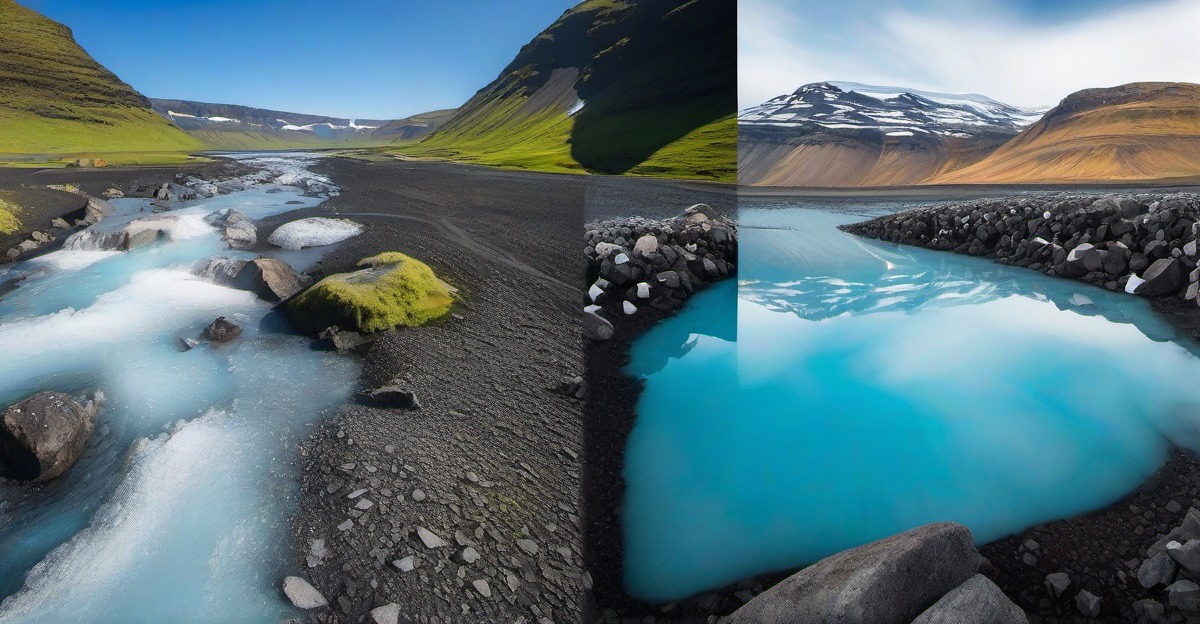
Summer vs Winter Iceland, Which Season for a Glacier Trip?
>20 hours of daylight or 4 hours of light. Midnight sun or Northern Lights. Open ice caves or no ice caves. They are different countries. Pick the one that matches what you want to do.
The honest answer to "which season is better for Iceland" is "better for what." The two seasons are not substitutes. They are different trips. Below is the side-by-side comparison of the six variables that actually matter for a glacier-focused visit, drawn from eight seasons of running tours in both.
Daylight, The Variable That Drives Everything Else
Summer (June, July, August)
20+ hours of usable daylight in late June. The sun does not set, it dips toward the horizon and bounces back up. You can drive at 11 PM with full sun. You can hike on a glacier at 9 PM. You can do the south coast in a single 12 to 13 hour day from Reykjavik and still have daylight left when you get home. This is the structural advantage of summer and the reason most first-timers end up visiting in summer without choosing to.
Peak daylight is the solstice week, around June 21. Late June and early July are the longest days. By mid-August you are back to 15 hours of daylight, which is still more than enough for any day trip.
Winter (November, December, January, February, March)
4 to 5 hours of usable daylight in December. Sunrise around 10:30 At the, sunset around 3:30 PM, and the quality of the light in between is a low blue-grey that flattens the landscape. You cannot do the full south coast route in a single December day. You can do two stops, maybe three, and you will be driving in the dark on either end. This is the structural disadvantage of winter and the reason most one-week itineraries are tight.
Late January and February start gaining 5 to 10 minutes of daylight per day, and by mid-March you are at 12 hours. The shoulder weeks on either side of the deep winter are the practical compromise for visitors who want both ice caves and reasonable daylight.
What You Can Do in Each Season
Summer can do
- South coast day trip from Reykjavik in a single day (Seljalandsfoss, Skogafoss, Reynisfjara, Solheimajokull).
- Multi-day Ring Road drive, all major sites accessible.
- Solheimajokull and Falljökull glacier walks with reliable weather windows.
- Jokulsarlon boat tours among the icebergs.
- Highland roads (F-roads) open to 4x4 rental cars, July through early September.
- Photography at midnight sun, golden hour extends to 11 PM and beyond.
Winter can do
- Ice cave visits under Vatnajokull, the blue caves that form every winter as meltwater channels freeze over.
- Northern Lights, the aurora is visible from late September to early April when the sky is dark enough.
- Snowmobiling on Langjokull and Myrdalsjokull glaciers.
- Solheimajokull glacier walk in winter conditions, smaller groups, more dramatic light.
- Hot springs without the summer crowds, Secret Lagoon and Myvatn Nature Baths.
- Photography of snow-covered black sand beaches and frozen waterfalls.
"March 2023, took a group to the Vatnajokull ice cave. Outside the cave it was minus 8, dark by 4 PM, the wind was 40 km/h. Inside the cave: blue light, silence, the only sound was meltwater dripping. Nobody took photos for the first 30 seconds. They just stood there. Summer cannot do this. Winter can only do this."
- March 2023, Vatnajokull ice cave with group
What Each Season Cannot Do
Summer cannot do
- Natural blue ice caves. The ice caves under Vatnajokull form only in winter when meltwater channels freeze. By June they are flooded or collapsed. The Katla ice cave is the year-round exception, and even it is more dramatic in winter when the surrounding snowpack is deeper.
- Northern Lights. The sky does not get dark enough from mid-May to mid-August for the aurora to be visible, even when solar activity is high. You can come in July and have perfect aurora conditions that you cannot see because there is no night.
- Snow on the south coast. The black sand beaches and waterfalls are snow-free in summer, which is the postcard look, but it means you do not get the winter landscape that makes the same sites look completely different.
Winter cannot do
- The full south coast route in a day. The daylight does not allow it. Most operators drop the day-trip version entirely in December and January and sell only the 2-day version with an overnight in Vik.
- Highland F-roads. Closed from October to June. Landmannalaugar, Thorsmork, and the central F-road routes are inaccessible in winter to any vehicle.
- Reliable weather windows. Winter storms can shut the south coast for a day or more at a time. If your schedule is 4 days in Iceland in January, you can lose 2 of them to weather.
Road Access, The Hidden Variable
The Ring Road (Route 1) is open year-round and plowed in winter, but individual sections close in storms. The south coast (Route 1 between Selfoss and Hofn) is generally accessible year-round with caution. The Westfjords and the West Iceland roads close more often. The highland F-roads are closed from October to June, full stop, and the closure dates move year to year based on snowmelt.
For first-timers, this matters in one specific way: if you are renting a 2WD car in winter, the road you can drive is a fraction of the road you can drive in summer. The dramatic landscapes (Landmannalaugar, Thorsmork, Askja) require a 4x4 in summer and a guided Super Jeep tour in winter. Plan accordingly.
Crowds and Cost
Summer is the peak season. July and August bring the highest crowds, the highest accommodation prices, and the most pre-booking required. The most popular day tours sell out 2 to 3 weeks in advance in July. You will not be alone at Seljalandsfoss or Reynisfjara between 11 At the and 4 PM.
Winter is the off-season for tourism, except for the Northern Lights and ice cave weeks in February and March when availability tightens. November and early December are the quietest weeks of the year in Iceland. The tradeoff is fewer tours, shorter daylight, and a higher risk of weather cancellation. The reward is lower prices, empty sites, and the conditions for the things summer cannot do.
Which Season for What You Want
You want the most variety per day
Summer. 20 hours of daylight means you can do the south coast, a glacier walk, and a Jokulsarlon tour in the same week without rushing. If you have 5 to 7 days in Iceland and want to see as much as possible, summer is the structural answer.
You want ice caves and Northern Lights
Winter, specifically late September to mid March. The blue ice caves only form in winter. The Northern Lights only happen in dark skies. Neither is possible in summer. If these are the priority, the answer is winter and the question is how to manage the daylight.
You want a compromise
Late April or late September. 12 to 16 hours of daylight, lower prices than peak summer, possible Northern Lights in the shoulder weeks, possible ice cave access at the Vatnajokull caves through April. The shoulder seasons are the underrated choice for a balanced trip.
Recommended Tour: South Coast and Glacier Hike (Summer Default)
If you are going in summer and want the most efficient single day, this is the small-group tour I would book. 12 to 19 passengers, glacier walk included, hotel pickup and drop-off in Reykjavik, 12 to 13 hours door to door. The route is the standard south coast one, covered in detail on the South Iceland page.
South Coast and Glacier Hike Day Tour from Reykjavik
We earn a commission when you book through our links on Viator (PID P00299531), at no extra cost to you.
Full-day small-group tour covering Seljalandsfoss, Skogafoss, Reynisfjara black sand beach, and a guided glacier walk on Solheimajokull. Available May to September. Max 12 passengers. Hotel pickup included.Iceland South Coast Full Day Small-Group Tour from Reykjavik
Visit the natural wonders of Iceland on this 10-hour tour from Reykjavik. Travel in a minibus to the black sand beaches of Reynisfjara, Seljalandsfoss and Skóga
Check availabilityPrivate Day Tour: Explore Iceland’s South Coast & Glacier Hike
The South Coast of Iceland is known for its breathtaking natural landscapes. You'll encounter a diverse range of sights, including waterfalls, glaciers, black s
Check availabilityIceland South Coast Full Day Small-Group Tour from Reykjavik
Visit the natural wonders of Iceland on this 10-hour tour from Reykjavik. Travel in a minibus to the black sand beaches of Reynisfjara, Seljalandsfoss and Skóga
Check availabilityPrivate Day Tour: Explore Iceland’s South Coast & Glacier Hike
The South Coast of Iceland is known for its breathtaking natural landscapes. You'll encounter a diverse range of sights, including waterfalls, glaciers, black s
Check availabilityIceland South Coast Full Day Small-Group Tour from Reykjavik
Visit the natural wonders of Iceland on this 10-hour tour from Reykjavik. Travel in a minibus to the black sand beaches of Reynisfjara, Seljalandsfoss and Skóga
Check availabilityIceland South Coast Full Day Small-Group Tour from Reykjavik
Visit the natural wonders of Iceland on this 10-hour tour from Reykjavik. Travel in a minibus to the black sand beaches of Reynisfjara, Seljalandsfoss and Skóga
Check availabilityPrivate Day Tour: Explore Iceland’s South Coast & Glacier Hike
The South Coast of Iceland is known for its breathtaking natural landscapes. You'll encounter a diverse range of sights, including waterfalls, glaciers, black s
Check availabilitySummer vs Winter, Common Questions
Can I see Northern Lights in summer?
No. The sky does not get dark enough from mid-May to mid-August for the aurora to be visible. The aurora is happening overhead but the brightness of the midnight sun washes it out. The Northern Lights season is late September to early April, peaking in November, February, and March when the nights are longest and the skies are most reliably dark.
Can I visit blue ice caves in summer?
No for the natural caves under Vatnajokull. They form in winter as meltwater channels freeze and collapse in spring. By June they are flooded or inaccessible. The Katla ice cave is the year-round exception, accessed by Super Jeep, smaller and less dramatic than the Vatnajokull caves but open in all seasons. Most operators run ice cave tours only between mid-October and mid-April.
Is it too cold to do a glacier walk in winter?
No, but the experience is different. Operators run glacier walks at Solheimajokull year-round. In winter the groups are smaller, you wear more layers, and the ice is firmer and more stable. In summer the conditions are easier but the ice is more broken up. Most people find winter glacier walks more dramatic, and the operator guides are usually more experienced in winter conditions.
What is the best month overall?
June for a first-timer who wants the easiest possible trip with maximum daylight. February for a winter trip focused on ice caves and Northern Lights. Late September or late April as the shoulder-season compromise. Avoid November and early December unless you specifically want the quietest possible trip and are prepared for very short days.
Do I need a 4x4 in winter?
For the Ring Road and the south coast, a standard 2WD car is enough in normal conditions. For the Westfjords, the Snaefellsnes peninsula in storms, or any F-road, you need a 4x4. Most rental companies in Reykjavik will not let you take a 2WD on F-roads regardless of season. In heavy winter weather, a 4x4 is safer even on the Ring Road.
Written by Sven Lindqvist, adventure and landscape photographer; Nordic travel specialist. Eight seasons on Iceland's Vatnajökull and New Zealand's Franz Josef and Fox glaciers. Last reviewed May 2026.
Ready to book? Check availability on Viator →
Explore More
Related guides and comparisons: